
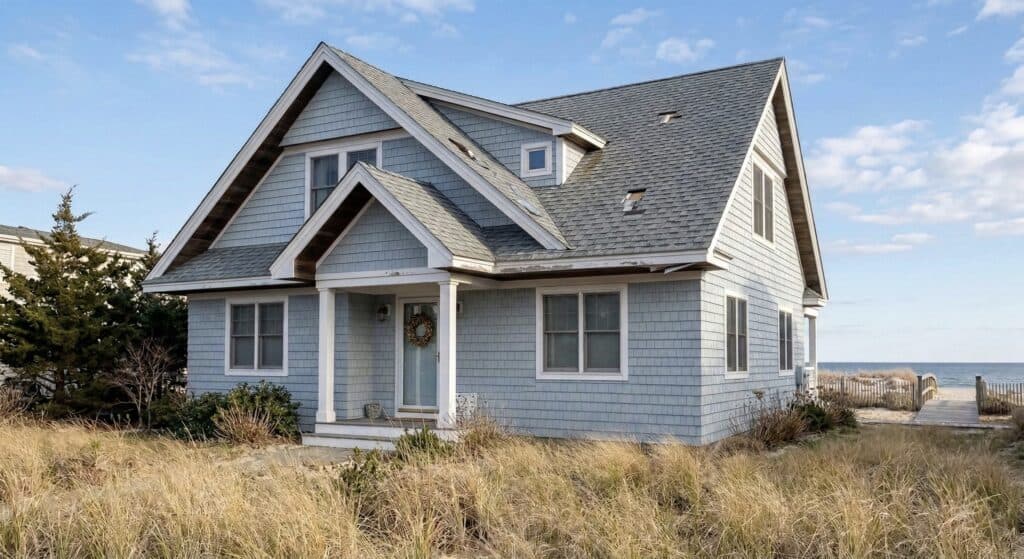
For many second homeowners in Ocean City and the nearby shore points, the first trip back after a winter “cold snap” is a mix of excitement and a bit of anxiety. While the Jersey Shore looks beautiful in winter, the harsh combination of freezing temperatures, coastal winds, and ice can cause significant damage to a property, especially the roof and soffits.
If you’re returning to your beach house for the first time after winter, it’s important to do a quick health check. The good news? You don’t need a ladder to see the most common warning signs. You can evaluate your home’s condition safely from the ground.
The Ground-Level Exterior Inspection
Before you even unlock the front door, take a slow walk around your house’s perimeter. Grab a pair of binoculars if you have them to get a closer look at the following:
- Shingle Integrity: Check for shingles that are “cupped,” curled at the edges, or missing entirely. High winds often lift brittle, cold-damaged shingles, exposing your roof deck to the next spring rain.
- Soffit and Fascia Warning Signs: The soffit (the underside of your roof overhang) is often the first area to show signs of ice dam damage. Look for sagging panels, water stains, or dark spots of mildew. If the soffit appears to be pulling away from the house, ice may have expanded behind it during the freeze.
- Gutter Alignment: Inspect if your gutters are sagging or pulling away from the roofline. Heavy ice buildup can bend brackets and create gaps where water may eventually pour directly onto your foundation or into your soffits.
- Debris on the Ground: Inspect your lawn and flower beds. If you see shingle granules (which resemble coarse sand) or actual pieces of shingle or trim, it’s a clear sign that winter weather has damaged your exterior.
Moving Inside: The Interior “Early Warning” Signs
Once you’re inside, set down the bags and quickly walk through each room—especially on the top floor.
- Ceiling and Wall Stains: Even if it hasn’t rained recently, look for “tea-colored” rings or faint yellow spots on the ceilings. These are classic signs that snow melted behind your shingles during the cold snap and seeped into the drywall.
- Peeling Paint or Wallpaper: Inspect the corners where the walls meet the ceiling. If the paint is bubbling or the wallpaper is peeling, moisture is likely trapped inside the wall cavity.
- The Attic “Light Test”: Access your attic with a flashlight and briefly turn it off. If you notice small spots of daylight shining through the roof boards, it indicates a potential entry point for water and pests.
Why It Matters Now
A small leak from a winter freeze won’t stay small for long. With spring storms approaching, a compromised roof or damaged soffit can quickly lead to costly structural rot and mold problems. Coastal homes are especially at risk because the salt air can speed up the deterioration of exposed wood and metal once the protective shingle layer is broken.
Suspect Damage? Call the Local Experts
If your ground-level inspection finds anything suspicious, don’t wait for the first “Nor’easter” of spring to confirm your concerns. Shore Points Roofing specializes in the specific needs of coastal New Jersey homes. We understand how the local climate influences different roofing materials and can offer a professional, thorough assessment to make sure your shore house is ready for the upcoming season.
Secure your investment and peace of mind. Reach out to Shore Points Roofing today for a professional inspection.