
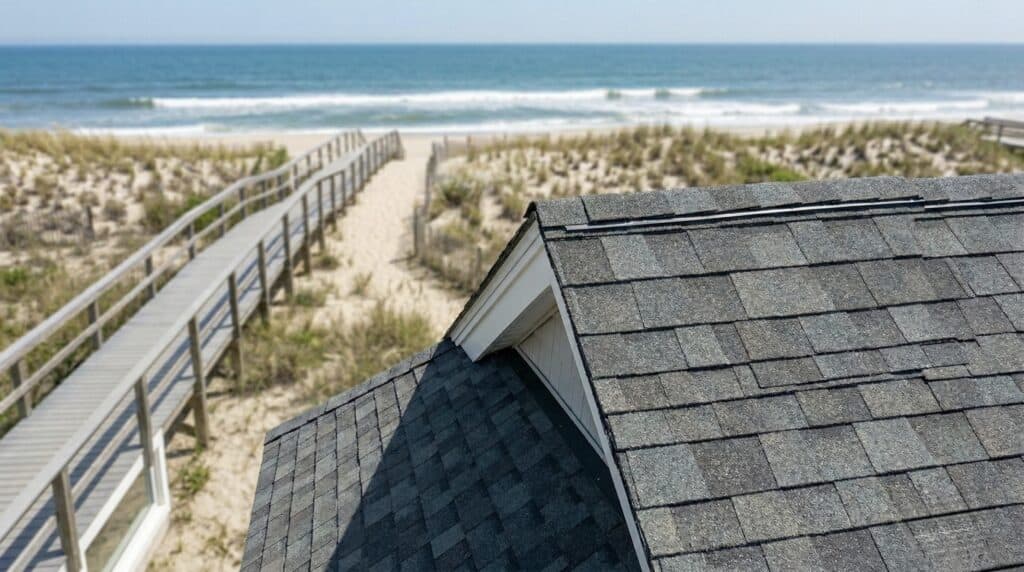
Living on the shore offers incredible views and a refreshing salt breeze, but for your home’s roof, it’s a high-stakes environment. Between the corrosive salt air, intense UV rays, and the threat of tropical-force winds, a “standard” roof just won’t cut it.
At Shore Points Roofing, we know that a coastal roof needs to be more than just waterproof—it needs to be battle-ready. Here is our guide to the best roofing materials for the unique challenges of the shore.
The Salt Air Struggle: Fighting Corrosion
The biggest silent killer of coastal roofs is salt spray. Salt is naturally corrosive and can eat through standard metal flashings and certain shingles in half the time they’d last inland.
- The Solution: For metal components, Aluminum or Copper are the gold standards. Unlike steel, aluminum doesn’t rust when exposed to salt.
- Shingle Choice: If you prefer asphalt, look for high-quality architectural shingles with enhanced algae resistance and zinc or copper granules, which help combat the moisture-heavy environment.
High Wind Ratings: Staying Attached
Coastal storms don’t just bring rain; they bring “uplift.” When wind hits the side of your house and rushes upward, it tries to peel your roof off like a lid.
- Wind Classifications: Look for materials rated for 130 mph winds or higher.
- Installation Matters: In coastal zones, we use specialized nailing patterns (6-nail instead of 4-nail) and high-wind starter strips to ensure that even if the wind howls, your shingles stay put.
- The Metal Advantage: Standing seam metal roofs are incredible in high winds because the panels are interlocked and fastened to the deck with concealed clips, leaving fewer edges for the wind to catch.
Extreme Temperatures & UV Exposure
The sun hits harder at the shore. With fewer trees for shade and the reflection of the sun off the water, your roof can reach blistering temperatures, leading to thermal expansion and contraction that cracks inferior materials.
- Reflectivity: Look for “Cool Roof” certified materials. These reflect UV rays rather than absorbing them, keeping your attic cooler and reducing your AC bill during those humid July afternoons.
- Synthetic Slate/Shake: These modern composites are engineered to withstand extreme temperature swings without warping, rotting, or cracking like natural wood or real slate might.
Top Material Contenders for the Shore
| Material | Salt Resistance | Wind Rating | Durability |
| Aluminum (Standing Seam) | Excellent | High | 50+ Years |
| Architectural Shingles | Good | Moderate to High | 20-30 Years |
| Synthetic Composite | Excellent | High | 50 Years |
| Copper | Best | High | 70+ Years |
The Shore Points Verdict
While there is no “one-size-fits-all” answer, Aluminum Standing Seam and High-Performance Composite Shingles are our top recommendations for the Jersey shore. They offer the best balance of corrosion resistance and wind uplift protection.
Ready to shore up your home? Don’t wait for the next hurricane season to find out if your roof is up to the task. Contact Shore Points Roofing today for a coastal-specific roof inspection. We’ll help you choose a material that looks beautiful while standing up to everything the ocean throws its way