
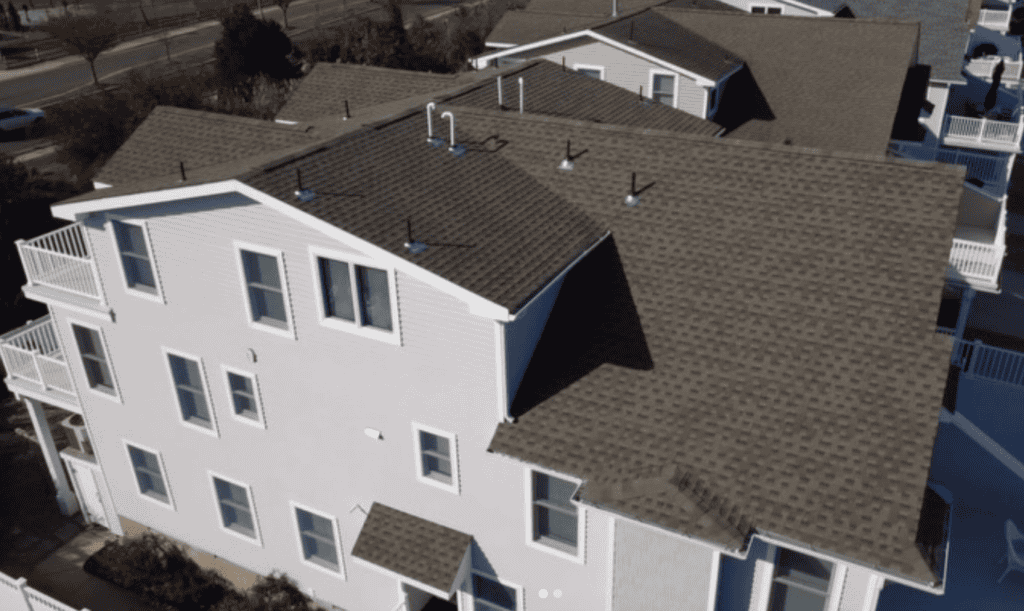
If you live close to the water, your roof faces challenges that inland homeowners don’t experience. Salt air, stronger sustained winds, and persistent humidity accelerate deterioration beyond what typical “national average” roofing guidelines consider. Choosing the right material isn’t merely about style — it’s crucial for durability, determining whether your roof lasts 20 years or begins failing after 12.
Before your next repair or replacement, consider how the most common roofing materials perform in our coastal environment.
How Coastal Conditions Attack a Roof
Three factors do most of the damage along the Shore:
- Salt spray — airborne salt settles on roofing surfaces and accelerates corrosion of metal fasteners, flashing, and any exposed hardware.
- Wind uplift — coastal properties regularly see gusts that inland homes rarely experience, putting extra stress on shingle edges, ridge caps, and seams.
- Humidity and algae growth — moist salt air is a breeding ground for algae streaking and moss, especially on north-facing slopes that don’t get much direct sun.
A material that isn’t rated to handle all three will show its age fast, regardless of how well it was installed.
Comparing Your Options
| Material | Wind Rating | Salt/Corrosion Resistance | Typical Lifespan (Coastal) | Best For |
| Architectural Asphalt Shingles | Up to 130 mph (with proper nailing pattern) | Good, if algae-resistant (AR) granules are used | 18–22 years | Most Shore homes; best value |
| Standing Seam Metal | Up to 140+ mph | Excellent, especially aluminum or coated steel | 40–50 years | Homes directly on the bay or ocean block |
| Impact-Resistant (Class 4) Shingles | High wind + hail/debris resistance | Good | 20–25 years | Homes in storm-exposed flood zones |
| Basic 3-Tab Asphalt Shingles | Up to 60–70 mph | Poor | 10–15 years | Not recommended for coastal properties |
Why Fasteners and Flashing Matter as Much as Shingles
Homeowners usually concentrate on the shingle brand, but the metal beneath and surrounding your shingles is often the first to deteriorate. Standard galvanized nails and flashing can begin rusting within a few years when installed close to water. For every coastal installation, we specify:
- Stainless steel or hot-dip galvanized fasteners
- Corrosion-resistant flashing at valleys, chimneys, and skylights
- A six-nail (rather than four-nail) shingle pattern to meet high-wind manufacturer warranties
Skipping these details is one of the most common reasons a roof underperforms its “rated” lifespan in coastal zones.
From a professional standpoint, if your home is within a mile of the bay or ocean, using algae-resistant architectural shingles with a six-nail pattern and stainless fasteners is usually an ideal choice — offering durability close to that of metal at a lower cost. Reserve standing seam metal for oceanfront or highly exposed properties, where the higher investment is justified by lower maintenance needs.
Making the Right Call for Your Home
The ideal roofing material depends on factors like proximity to water, exposure to prevailing winds, and your planned stay duration. Being just a block or two away from the beach can significantly affect the choice, which is why generic online cost calculators often don’t provide accurate estimates for Shore homeowners.
If you’re planning a repair or replacement and want a recommendation based on your specific location, flood zone, and exposure, our team can walk your property and give you options that are actually built for where you live — not just what’s cheapest to install. Contact Shore Points Roofing today at 609.796.2072 or request a free quote to get a coastal roofing recommendation built for your home.