
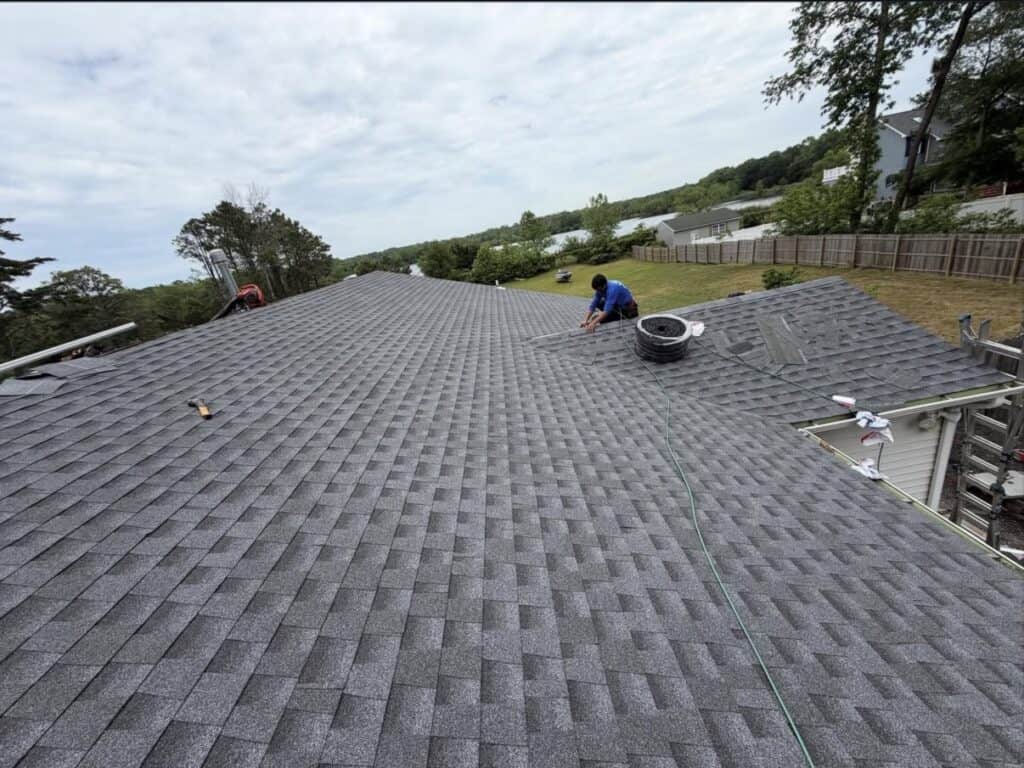
NOAA’s 2026 outlook is calling for a below-normal Atlantic hurricane season, somewhere in the range of 8 to 14 named storms, with 3 to 6 expected to strengthen into hurricanes. For shore homeowners, that headline is easy to misread as permission to skip the prep work this year. Don’t. As NOAA’s own National Weather Service director put it heading into this season, it only takes one storm to make for a very bad season, and a quieter overall outlook does nothing to protect your roof if that one storm happens to track straight up the coast.
We’ve already covered how to protect yourself from storm chasers after a major storm hits. This is the piece that comes before that one. The goal here isn’t damage control, it’s making sure your roof is in the best possible position to take a hit, and that you have the documentation in hand if it does.
The Pre-Season Roof Checklist
Run through this before the season ramps up toward its historical peak in August through October. Most of it takes an afternoon, and none of it requires climbing onto the roof yourself.
1. Clear and inspect the gutters. Clogged gutters force rainwater up under the shingle edge instead of away from the roofline, and during a tropical downpour that backup happens fast. Clear out leaves and debris, then check that downspouts are securely attached and draining at least several feet away from the foundation.
2. Check flashing around every penetration. Chimneys, vent pipes, skylights, and the joints where a roofline meets a wall are the most common places water finds its way in during wind-driven rain. Look for flashing that’s visibly lifted, cracked sealant, or rust streaks below these points, all signs that the seal has started to fail.
3. Walk the roof’s edge for loose or lifted shingles. From the ground with binoculars, or better, have a professional check, look for shingles that look curled, cracked, or slightly raised at the corners. A shingle that’s already loose before the season starts is the first one to go in 50 mph gusts, and once one goes, wind can get underneath its neighbors too.
4. Trim back overhanging branches. Any limb that could reach your roofline in a strong gust is a liability. Tropical storm-force winds don’t need a direct hit to snap weak branches, they just need sustained pressure over a few hours. Trim anything within falling distance of the house, not just branches that look obviously dead.
5. Secure or remove loose items near the house. This one’s about your roof too, not just your yard. Patio furniture, trash cans, and anything else that can become a projectile in high wind can do as much damage to shingles and gutters as the storm itself.
6. Check attic ventilation and insulation. This sounds unrelated to storm prep, but a poorly ventilated attic holds more moisture, and a roof deck that’s already softened from trapped humidity has far less structural integrity to resist wind uplift than a dry, well-ventilated one.
7. Schedule a professional inspection if your roof is past the 10-year mark. Some failure points, soft decking, deteriorating underlayment, marginal nailing patterns, aren’t visible from the ground or even from a ladder. A trained eye catches what a homeowner’s walk-around won’t.
What Your Insurance Company Actually Expects to See
If your roof does take damage this season, the strength of your claim often comes down to what you can prove about its condition beforehand, not just what happened during the storm. Insurers are looking for:
- Evidence the damage was storm-related, not pre-existing wear. This is the single biggest reason claims get challenged. If an adjuster can argue your roof was already failing before the storm, due to age, neglect, or a problem you knew about, they have grounds to deny or reduce the payout.
- A maintained roof, not a neglected one. Insurers distinguish between sudden storm damage and gradual deterioration. A pattern of regular upkeep works in your favor; a roof that’s clearly been ignored for years works against you.
- Documentation that predates the storm. Photos, inspection reports, or repair receipts dated before the event are far more persuasive than anything taken after, since after-the-fact photos can’t prove what the roof looked like beforehand.
- A clear, itemized scope of damage. Vague descriptions slow down claims. Specific, dated documentation speeds them up.
The Professional Perspective: Adjusters aren’t being difficult when they ask for pre-storm condition evidence, they’re following the same rule every insurer uses: damage has to be tied to a covered event, not to time and neglect. The homeowner who has a dated photo folder from May will have a dramatically easier claims experience than the one who doesn’t, even if both roofs sustained identical damage.
Documenting Your Roof Before the Season Starts
This takes about fifteen minutes and it’s the cheapest insurance policy you’ll ever take out on your home.
Walk the perimeter of your house and take wide, clear photos of every roof slope from the ground, plus close-ups of any existing wear, repairs, or trouble spots you’re already aware of. Note the date directly in your phone’s camera roll, most phones automatically timestamp photos, which is exactly the kind of proof an adjuster wants to see. If you’ve had a professional inspection or repair done recently, save that report or invoice in the same place as your photos. Email the whole batch to yourself or store it in cloud storage, not just on a phone that could be lost, damaged, or left behind in an evacuation.
If a storm does cause damage, this pre-season folder becomes your baseline. Comparing “before” and “after” photos side by side is often the difference between a claim that gets approved quickly and one that drags out for months.
Don’t Wait Until the Forecast Cone Includes You
By the time a storm is in the five-day forecast, contractors are booked, and your options for a pre-storm inspection or repair narrow fast. The homeowners who come through hurricane season with the least stress are the ones who treated this checklist as a June task, not an emergency one.
If it’s been a few years since your last roof inspection, or you’re not confident your roof would hold up to sustained coastal wind, reach out to Shore Points Roofing for a free quote. We’ll check the things that matter most before the season gets going, not after.