
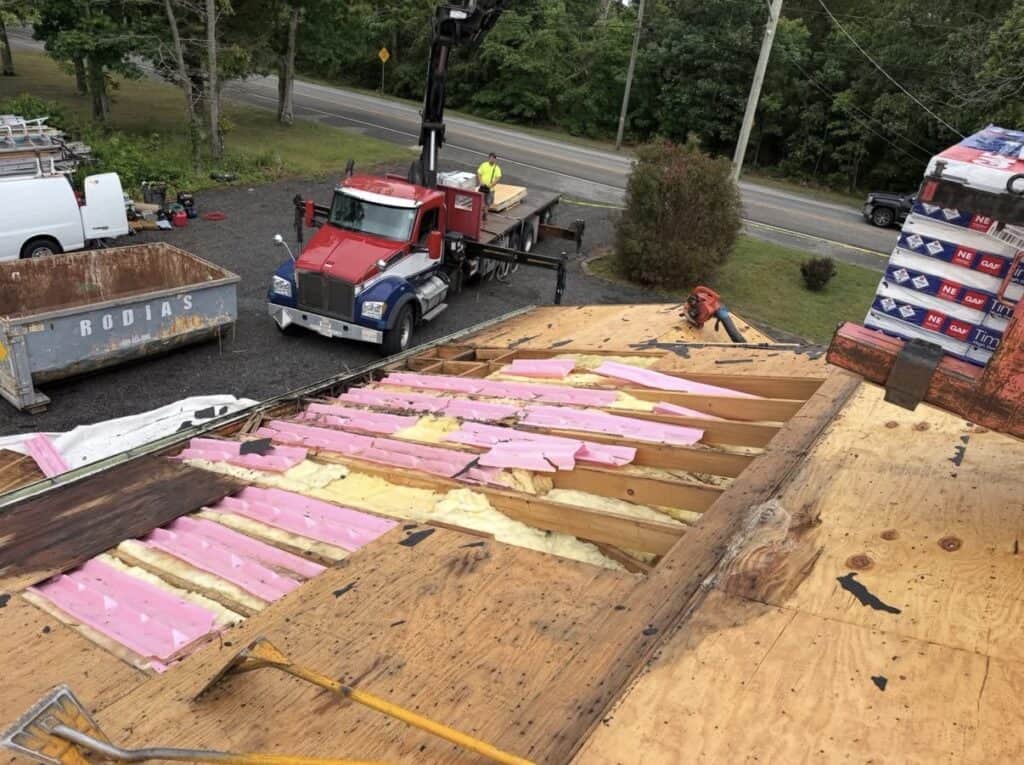
With June 1 officially marking the start of the Atlantic hurricane season, coastal homeowners are once again turning their attention to storm readiness. After a severe coastal storm hits our area, the neighborhood usually fills up with two things: debris and out-of-town work trucks.
When high winds, heavy rain, or severe weather rattle your home, it’s completely natural to want your roof secured as fast as possible. Unfortunately, national scam syndicates, known in the industry as “storm chasers”, capitalize on that exact urgency. They flood disaster-stricken areas, knock on doors, and use high-pressure sales tactics to exploit stressed homeowners.
The result? They take massive insurance deposits and either vanish entirely, or leave behind shoddy, non-code-compliant work that cuts corners against our unique coastal elements.
According to the National Insurance Crime Bureau (NICB), insurance fraud from post-storm roofing scams costs consumers billions annually, making severe weather a prime target for predatory, unlicensed entities.
Here is exactly how to spot a storm chaser, the protective questions you must ask, and why keeping it local matters for your home’s structural survival.
Red Flags: How to Spot a Post-Storm Roofing Scam
Storm chasers are highly sophisticated sales operations. They look professional, wear matching shirts, and use drones or digital roof reports to look legitimate. However, their business model relies on speed and distance. Look out for these telltale signs:
- The Unsolicited “Free Inspection” Knock: Legitimate, established local contractors are usually booked solid handling their existing clients after a major storm. If a contractor randomly knocks on your door offering a free inspection because they “just finished a roof down the street,” proceed with extreme caution.
- Out-of-State License Plates: Check the trucks parked on the street. Storm chasers travel cross-country tracking weather radar patterns. If their commercial vehicles sport out-of-state tags or temporary magnetic door signs rather than permanent local branding, they are likely transient.
- Demanding Your Insurance Check Upfront: A classic scam hallmark is a contractor pushing you to sign an “Assignment of Benefits” (AOB) or demanding your initial insurance down payment immediately before material is even dropped at your house.
- The “Today-Only” Deductible Deal: It is a violation of state law for a contractor to offer to “waive,” rebate, or absorb your homeowners insurance deductible. If they claim they can manipulate the invoice so you pay zero out of pocket, they are asking you to participate in insurance fraud.
7 Questions You Must Ask Before Hiring a Roofing Contractor
Before you let anyone climb a ladder onto your home, put them through this strict screening process. A reputable local business will answer these seamlessly; a storm chaser will dance around them.
1. “What is your New Jersey Home Improvement Contractor (HIC) registration number?”
In New Jersey, roofing contractors are legally required to be registered as Home Improvement Contractors with the Division of Consumer Affairs. They must renew this annually. Ask for this number and verify it online; an out-of-state storm chaser will rarely hold a valid, active in-state registration.
2. “Can you provide current certificates for both General Liability and Workers’ Compensation insurance?”
Do not just take their word for it. Have them instruct their insurance agency to email certificates showing a minimum of $500,000 in general liability alongside valid workers’ comp coverage. If an uninsured worker falls off your roof, the financial liability can fall squarely on your homeowners insurance policy.
3. “Where is your physical office located, and how long have you been there?”
A P.O. Box or a temporary hotel address doesn’t count. You want a contractor with a brick-and-mortar office in the immediate region. If a warranty issue pops up two years from now, you need to know their office door will still be open.
4. “What specific manufacturer certifications do you hold?”
Elite roofing manufacturers (like GAF, CertainTeed, or Owens Corning) only grant top-tier certifications (such as Master Elite or Select ShingleMaster Status) to contractors who pass rigorous training, financial vetting, and local quality checks. These certifications allow the contractor to offer extended, non-prorated system warranties that uncertified storm chasers simply cannot provide.
5. “What is your daily cleanup and property protection plan?”
Roof tear-offs generate thousands of pounds of sharp debris and hazardous nails. Ask how they protect your landscaping, decks, and driveway. Will they use specialized catch-alls or dump containers? Do they run heavy-duty magnetic sweeps daily to prevent flat tires and safety hazards for your family and pets?
6. “How do you handle local building permits and municipal inspections?”
If a contractor asks you to pull the building permit as the homeowner, that is an immediate red flag. It usually means they aren’t registered to operate in that municipality or want to avoid accountability. A professional handles all local permitting, coordinates with the city code enforcement officer, and schedules the final required inspections.
7. “What is your explicit payment schedule?”
Never pay 100% upfront. A standard, professional payment structure typically looks like a 1/3 deposit to secure a spot on the schedule and order materials, 1/3 upon material delivery and the start of tear-off, and the final 1/3 balance only after the job is fully completed, cleaned up, and passes municipal inspection.
Why Coastal Regions Require Local Expertise
Baking local knowledge into your roofing choice isn’t just about supporting local business—it’s a structural necessity. Our unique coastal environment subjects roofs to severe conditions that inland out-of-state crews often fail to anticipate:
- Salt Air Corrosion: The constant salt air mist eats away at cheap, standard metal components. Local roofers know that using standard steel nails or aluminum flashing is a recipe for rapid failure. Coastal properties require upgraded stainless steel fasteners and heavy-duty, salt-resistant aluminum or copper flashing systems to survive.
- High-Velocity Hurricane Winds: Standard building practices don’t cut it when sustained coastal winds or nor’easters slam the coastline. Local crews understand local wind-zone codes, which dictate strict six-nail fastening patterns per shingle rather than the standard four, combined with high-wind rated starter shingles along the eaves and rakes to prevent blow-offs.
- Extreme Humidity & Moisture Retention: High coastal humidity combined with intense sun creates an incubator for wood rot and attic mold. Local contractors place immense emphasis on balanced ventilation systems—ensuring continuous soffit-to-ridge airflow—to actively pull humid air out of your roof structure before it degrades the plywood deck from the inside out.
Frequently Asked Questions (FAQ)
Q: My roof is leaking right now after a storm. What should I do first?
A: Your very first step should always be calling your homeowners insurance provider to log the claim. Concurrently, reach out to an established local contractor to apply temporary emergency tarping to mitigate interior damage. Keep records and receipts for all temporary mitigations, as insurance carriers typically reimburse these emergency costs.
Q: A contractor told me they can handle my entire insurance claim for me so I don’t have to deal with it. Is this true?
A: Legitimate contractors can meet your insurance adjuster at your home to point out hidden damage and ensure the scope of work is accurate. However, under consumer protection laws, a roofing contractor cannot legally act as your public insurance adjuster or negotiate policy terms on your behalf.
Q: What happens if a storm chaser does subpar work and leaves town?
A: Unfortunately, if an out-of-state entity installs a roof that fails an inspection or leaks a year later, your structural warranty is effectively useless if the company dissolves or moves to another state. You would be left paying a local contractor out-of-pocket to tear off and fix the defective work. Always prioritize verified, local permanence over a fast talking post-storm sales pitch.