
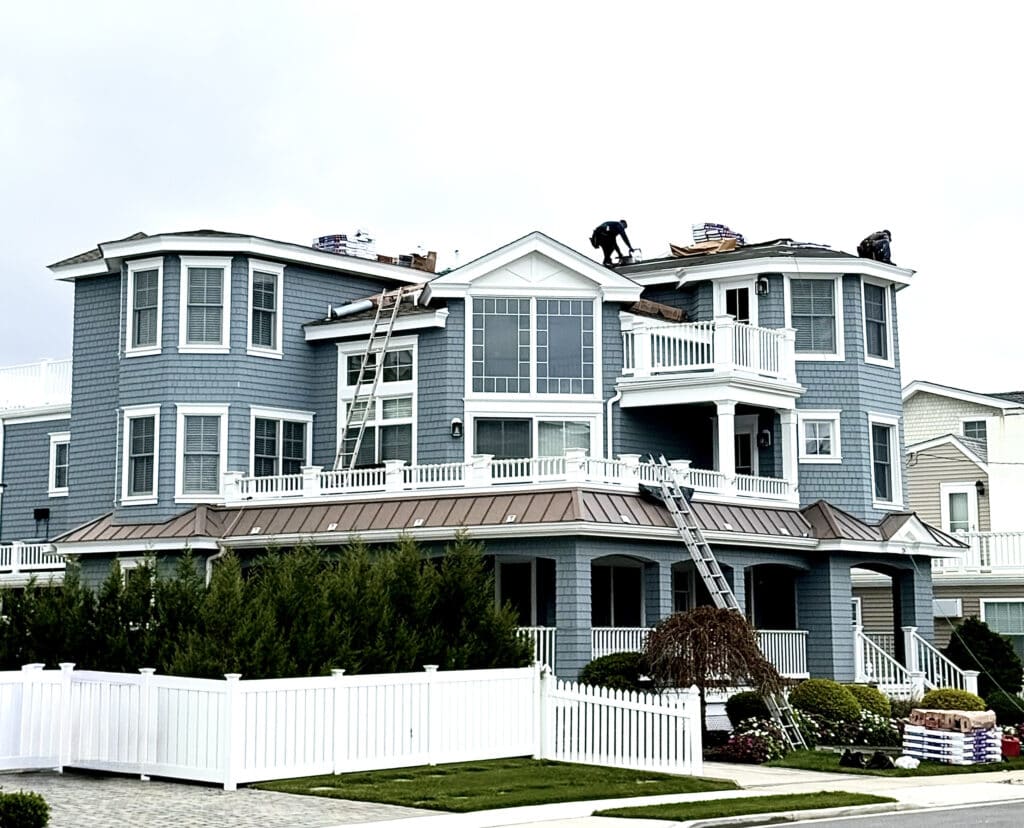
Living by the coast provides stunning views and a soothing salt-air breeze, yet that environment is extremely tough on your home’s roof. In a coastal town, a roof isn’t merely shelter; it serves as a crucial barrier against relentless environmental forces.
At Shorepoints Roofing, we observe how the Atlantic climate impacts a home’s aging process. Recognizing these specific challenges can assist you in safeguarding your investment and ensuring the long-term durability of your property.
1. The Corrosive Power of Salt Air
Salt spray continuously threatens coastal roofs because salt naturally causes corrosion. When it deposits on roofing materials, it speeds up the oxidation process.
- Metal components such as flashing, nails, and vents that are not specially designed for marine environments are prone to rusting and may fail prematurely.
- Structural Integrity: Saltwater seeping through the outer layer can weaken the fasteners securing your shingles, increasing the risk of wind damage to the roof.
2. High-Velocity Winds and Uplift
Coastal homes typically face higher sustained wind speeds and experience more frequent gale-force gusts compared to inland properties.
- Shingle blow-off occurs when strong sea breezes lift traditional shingles, breaking the adhesive seal and permitting rain to seep underneath.
- Wind-Driven Rain: It’s not only the wind but also the moisture it transports. Strong winds can force water beneath shingles or into soffit vents, causing interior leaks that are hard to identify.
3. Intense UV Exposure
Water and sand reflect sunlight, significantly increasing the UV exposure on your roof. This “double dose” of radiation accelerates the breakdown of asphalt oils in shingles much more rapidly than in wooded or suburban regions.
- Brittleness: Over time, shingles tend to become brittle, develop cracks, and lose their protective granules.
- Thermal expansion occurs when roofing materials repeatedly heat up and cool down, such as during hot midday sun followed by a cool ocean breeze. This constant expansion and contraction can put stress on seals and joints, potentially leading to damage.
The Impact on Lifespan and Homeowner Costs
Although an asphalt shingle roof inland usually lasts 25 to 30 years, a coastal roof often has a shorter lifespan—sometimes only 15 to 20 years—if not properly maintained.
Potential Additional Costs:
- Specialized Materials: To prevent corrosion, homeowners typically invest in stainless steel or copper flashing and fasteners, which tend to be more expensive initially than standard galvanized steel.
- Frequent inspections are essential for coastal roofs due to the risk of wind-driven rain and salt buildup. Regular professional check-ups help identify minor problems early, preventing them from developing into larger structural issues.
- Insurance premiums tend to be higher in coastal areas because of the increased storm damage risk. As a result, insurance providers often enforce stricter requirements for roof age and material ratings, such as Class 4 impact resistance.
Protecting Your Shore Home
Selecting the appropriate contractor is essential. Shorepoints Roofing focuses on materials that perform well in salt air, including high-wind rated shingles and hardware resistant to corrosion.
If you haven’t had your roof inspected since the last major storm season, now is the time. Protecting your home starts with a roof built to withstand the unique demands of the shore.
Contact Shorepoints Roofing today for a coastal-specific roof evaluation!